Why does the receptionist need to ask what is wrong with me?

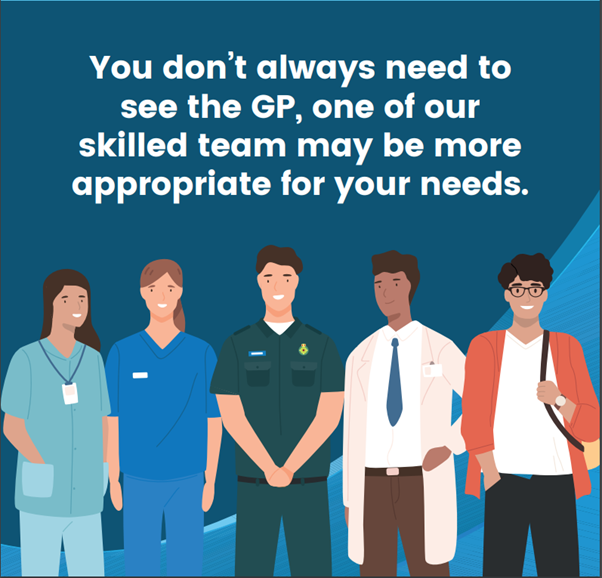
General practices, what most of us refer to as the doctors, have teams of qualified healthcare professionals who can help with many health problems. When you contact the practice, you might be offered an appointment with someone other than a GP because they may be the best person to help you.
There are different roles and services available.
- Medication reviews and queries are managed by a team of clinical pharmacists.
- Sprains, sports injuries and muscle pains can be treated by a first contact physiotherapist.
- Pregnancy tests or the morning after pill can be accessed via a pharmacist.
- When it comes to managing long term conditions like diabetes or asthma, a nurse practitioner is often the most appropriate professional to help you.
- NHS Pharmacy First can treat patients for seven common conditions: acute otitis media (ear infection), impetigo, infected insect bites, shingles, sinusitis, sore throat and uncomplicated urinary tract infections.
- If you need help connecting yourself to activities, groups and services in your community to meet practical, social and emotional needs that affect your health and wellbeing, you can speak with a social prescriber.
- A mental health practitioner focuses on your mental health needs and provides a safe space to talk about how you are feeling and what support might help.
GP receptionists
Reception staff are members of the team and are trained to ask certain questions. They may ask, “Why do you need to be seen?” This is to make sure you receive:
- the most appropriate medical care
- from the most appropriate health professional
- at the most appropriate time
Reception staff are asked to collect brief information from patients to:
- help doctors prioritise home visits and phone calls
- make sure all patients receive the appropriate level of care
- direct patients to a nurse or another health professional, rather than a doctor, where appropriate
Reception staff, like all members of the team, are bound by confidentiality rules:
- any information you give is treated as strictly confidential
- the surgery would take any breach of confidentiality very seriously and deal with it accordingly
- you can ask to speak to a receptionist in private, away from the reception desk
- if you feel an issue is very private and do not wish to say what it is, this will be respected
The right care, first time
Using the full primary care team can help you get the right support sooner, including advice, treatment or reassurance. It can also free up GP appointments for people who need a GP’s expertise.
Find out more about your general practice team
Primary care services provide the first point of contact in the healthcare system, acting as the front door of the NHS. Primary care includes general practice, community pharmacy, dental and optometry (eye health) services.