What people living rurally have told us about their healthcare
Rural areas can be highly desirable places to live. National data on rural wellbeing shows that people living in rural areas often report higher levels of wellbeing and have a longer life expectancy than those living in urban areas.
Around 17 percent of England’s population lives in rural areas, meaning rural health and care affects millions of people across the country.
There is also evidence that access to healthcare professionals can be better in rural areas. For example, GP workforce data shows us that the ratio of full time equivalent GPs to patients is higher in rural areas than in urban ones.
On the surface, this suggests that people living rurally should be well served by health services.
However, these averages do not tell the full story. Where people live, how far they need to travel, the availability of transport and the reliability of digital connections all play a significant role in how easy it is to access care in practice.
Setting the local context
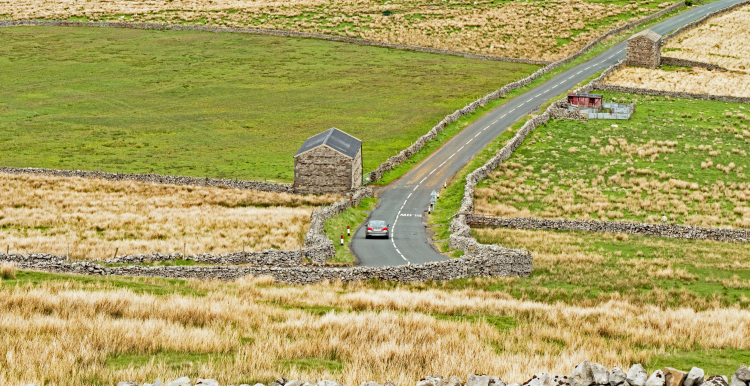
North Yorkshire is the largest county in England, with just over 615,000 people spread across a very wide geographical area. Only eight towns have populations of more than 10,000, with Harrogate and Scarborough being the largest. In much of the county there are just 76 people per square mile, compared with the English average of 430.
85 percent of the county is classed as very rural or super sparse. This means that most residents live in smaller communities, villages or isolated areas. For many people, distance, transport, isolation and digital connectivity shape everyday life and influence how easily they can access health and social care.
The population profile of North Yorkshire also matters. The county has a higher proportion of older people than the national average, with around 32 percent of residents aged over 65 compared with 23 percent across England. More than half of people report living with a longstanding health condition.
Looking ahead, NHS workforce projections suggest that by 2037, a third of people aged over 85 will live in rural areas.
Taken together, this points to growing demand for health and care services in rural communities, particularly for older people and those managing long term conditions. It also raises important questions about how services are planned and delivered in places where people are more spread out and transport options are limited.
Listening to rural experiences
In 2023, our Rurality and healthcare barriers report brought together what people across North Yorkshire were telling us about accessing health and care. Distance, transport, appointment availability, digital access and loss of local services were recurring themes.
These issues were explored again in 2025 when we brought together community organisations, local NHS partners and North Yorkshire Council for a rurality and health and social care summit. The discussion reinforced what we had been hearing consistently and helped shape further reflection on how rural services are experienced and how they need to adapt.
Alongside this work, people living in rural areas have continued to share their personal experiences with us through our ongoing listening activities.
What people living rurally have told us
Many people described how distance affects their ability to access healthcare. Travelling long distances for appointments is not simply inconvenient. It can be tiring, costly and stressful, particularly for people with long term conditions, caring responsibilities or limited incomes.
One person told us, “There are no buses in our village and the doctor’s surgery is not in our village. Unexpected trips to hospital doctors are putting us into debt.” This highlights how travel costs and lack of transport can quickly become a serious barrier to care.
Others spoke about how even small changes can disrupt access to services. One example involved a couple in their 60s who moved just two miles away. Although they kept the same GP surgery, “they can no longer get medications delivered to their home.” For people managing multiple prescriptions, this loss of support can have a significant impact on independence and wellbeing.
Accessing appointments was another common concern. People told us about long waits, difficulty getting through by phone and uncertainty about what to do next after contacting services. One person described their experience of remote appointments, saying, “It’s very hit and miss as to whether you can get an appointment. The signal here is dreadful, so mobile connection is poor and not good enough to discuss symptoms.”
For others, travelling for care added extra pressure when appointments were scheduled far from home or at times that did not align with transport availability. One person explained how a hospital appointment scheduled on a Sunday resulted in additional accommodation costs and time away from home, adding that “the appointment could have been offered remotely, negating the time and cost involved with travelling over.”
Together, these experiences show how rural access is shaped by a combination of distance, transport, service design and digital connectivity.
Primary care and first points of access
Primary care services such as GPs, dentists, pharmacists and community services are intended to be the first point of contact for most people’s health needs. When access to these services is difficult, the impact on rural communities can be felt quickly.
While some national data suggests better access to clinicians in rural areas, people have told us that this does not always translate into easier access in practice. Travel distances, appointment availability and service configuration all influence whether people can actually use local services.
Access to NHS dentistry
Access to NHS dentistry is a particular challenge in rural areas. Government statistics show there are fewer dentists per head of population in mainly rural areas compared with mainly urban areas. This difference in availability can make it harder for people to register with an NHS dentist close to home.
Healthwatch analysis of the GP Patient Survey shows that people living in rural areas are more likely to report difficulty accessing NHS dental care. A higher proportion of people in the most rural areas say they could not get an NHS dental appointment, had a poor experience of NHS dentistry, or were placed on a waiting list compared with people living in the most urban areas.
National plans to improve NHS dentistry include measures such as the use of mobile dental vans in some rural and coastal areas. While these initiatives may help increase access in the short term, people have told us that long term availability, continuity of care and clear information about local provision remain key concerns.
Choice in how appointments are offered
Healthwatch England has previously highlighted the importance of patients being able to choose the type of appointment that works best for them. In rural areas, this flexibility can make a real difference.
For some people, a remote appointment can avoid a long, difficult or costly journey. For others, remote care is not suitable. Poor broadband or mobile coverage can make phone or video appointments unreliable, and some people prefer face to face discussions, particularly for complex or sensitive health issues.
Research by Ofcom shows that broadband and mobile coverage remain weaker in rural areas than in urban ones. While most urban premises have access to superfast broadband, this is not the case everywhere in rural areas. Locally, a significant proportion of North Yorkshire’s rural areas still lack reliable broadband, and average download speeds are lower than the national average. These gaps can limit the usefulness of digital health options for some people.
Why this matters now
National priorities for health and care continue to focus on prevention, digital services and providing care closer to home. These ambitions align with many of the things people living rurally tell us they want to see.
However, people have been clear that these changes must reflect rural realities. Digital services only work where infrastructure and support are in place. Care closer to home only makes a difference if people can physically reach services without relying on long journeys or informal support networks.
The consistency of messages from our 2023 report, ongoing feedback and the discussions at the 2025 rurality and health and social care summit shows that while progress is being made in some areas, many rural challenges remain.
What is changing and what still needs attention
There are signs of positive change. Work to improve broadband and mobile coverage continues, creating new opportunities for accessing care online. Some services and community organisations are exploring more flexible and community based ways of providing support.
At the same time, transport networks remain fragile, and access to face to face care is still difficult for many people. Workforce pressures, service availability and the loss of local provision continue to affect how easy it is to get the right care at the right time.
People have told us they want change that feels practical, joined up and rooted in the realities of rural life.
What we are doing next
At Healthwatch North Yorkshire, we use what people tell us to help shape how services are planned and delivered. We share rural experiences with NHS decision makers, councils and service providers so that future plans reflect real lives, not just averages.
Our work continues to build on the evidence from our 2023 Rurality and healthcare barriers report, the discussions and insights from the 2025 rurality and health and social care summit, and the ongoing feedback we hear from people living rurally across North Yorkshire.
How you can help shape rural healthcare
Your experience matters. Whether you have struggled to access care, found support that worked well, or have ideas about what could make a difference, your voice helps influence change.
By sharing what life is really like for people living rurally, you help ensure health and social care services are shaped around the communities they serve, now and in the years ahead.