Making hospital care more accessible in Harrogate and Ripon
NHS care across the county does not always feel set up for everyone.
In our recent work on making health appointments work for everyone, people have shared experiences that highlight common challenges. These are not specific to Harrogate and Ripon but reflect the county.
People tell us that it is often the small moments that shape their experience. Not always big issues, but things like not being asked what would help, struggling with communication, or having to repeat the same information.
For some, it is the environment. Busy wards, bright lights and noise can feel overwhelming. For others, it is whether staff take the time to understand what matters to them early on.
But work is happening to make things better.
What’s changing in Harrogate and Ripon
Harrogate and District NHS Foundation Trust has put more structure around how it identifies and supports people who may need extra help.
The focus is on recognising people’s needs earlier, recording them clearly, and making sure that information is visible to staff so it can be acted on.
This is what reasonable adjustments are in practice. They are small, practical changes that help people access care safely and comfortably, and under the law, health services are expected to make them where needed.
Harrogate Hospital have put together a leaflet about examples of reasonable adjustments
Read the reasonable adjustments leaflet
Some of the work was already happening in parts of the hospitals. The difference now is the move towards making it more consistent, so people have a similar experience wherever they are seen, even if it's by a different doctor, nurse or healthcare assistant.
What this looks like in practice
One of the main changes made is how information about people’s needs is recorded and shared.
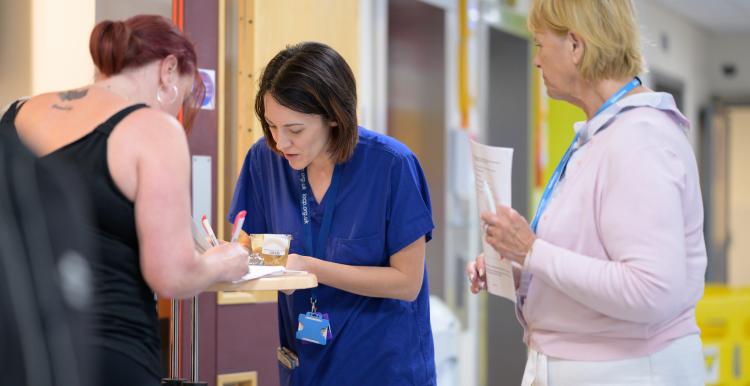
Patients with a learning disability are now flagged on hospital records, along with any communication needs, such as easy read information, large print or interpreters. This means staff can see what support might be needed before an appointment even begins.
People are also being encouraged to say what works for them. For example, patients may be asked simple questions about what would make things easier, such as:
- being seen more quickly if waiting is difficult
- having a quieter space
- bringing a carer or family member with them
- having extra time during appointments
- receiving information in a different format
These are often small changes, but they can make a big difference to how someone experiences care.
Supporting staff to respond
Tools like “Stop, Think, Adjust” are being used to help staff pause and ask a simple question: does this person need anything different to make their care work for them?
It is about taking a moment to think ahead and make small changes early, rather than waiting until something goes wrong.
There are also changes to how care is planned. For example:
- simple prompts built into hospital appointments and maternity care to remind staff to ask about people’s needs
- follow up calls if someone with a learning disability misses an appointment, to check if they need support or help to rebook
- involvement of learning disability liaison nurses, where this would make things easier for the person
All of this helps make these adjustments part of everyday care, rather than something that is added at the last minute.
Making care more personal
Another change is the introduction of “About Me” documents.
These are simple forms that patients or carers can complete to share important information, such as how someone prefers to communicate, what they like or dislike, and what might make them anxious.
For example, this might include what someone likes to be called, how they communicate, what helps when they are upset, or anything that could make a hospital stay easier to manage.
They can be completed by family or carers and kept by the bedside, so staff can quickly understand what matters to the person in front of them, even if the person receiving the care is not able to explain this themselves.
They are particularly important for people living with dementia but can be used more widely.
Practical support on the day
The hospitals have also introduced small, practical changes to make visits easier.
This includes providing sensory and distraction items, such as:
- ear defenders
- eye masks
- fidget and sensory items
- colouring books
These can help people feel calmer and more comfortable in what can be a busy and unfamiliar environment.
What difference this is making
For people, these kinds of changes can make a real difference to how care feels.
People are more likely to feel:
- less anxious before and during their visit
- more able to understand what is happening
- more confident that staff understand their needs
- better supported if they are a carer
For staff, having clearer information makes it easier to respond in a consistent way, rather than relying on guesswork or last minute adjustments.
Why this matters
Across North Yorkshire, people have told us that care does not always feel set up for them, especially when they need extra support.
We hear that:
- people are not always asked about their needs early enough
- communication does not always work for them
- hospital environments can feel overwhelming
- carers are not always recognised or involved
- support can vary depending on who they see
Taken together, these experiences can make care more stressful than it needs to be, and in some cases can put people off seeking help.
This example shows what can happen when those providing NHS care ask the right questions early and act on what people say.
It reflects what people told us in our report on making health appointments work for everyone, where small, practical adjustments, made early and consistently, can make care easier to navigate and less stressful.
While many of these changes are small on their own, together they can make care feel more consistent, more understanding, and more responsive to what people need.
This article is based on information shared by Harrogate and District NHS Foundation Trust about how they are improving support for people who need reasonable adjustments.